
FREE RESOURCE
The 2026 State of Product Leadership Report
107 senior product leaders share their thoughts on AI pressure, agentic shifts, research, adoption, and where the product leader's role is headed.



ABOUT THIS REPORT
Our methodology
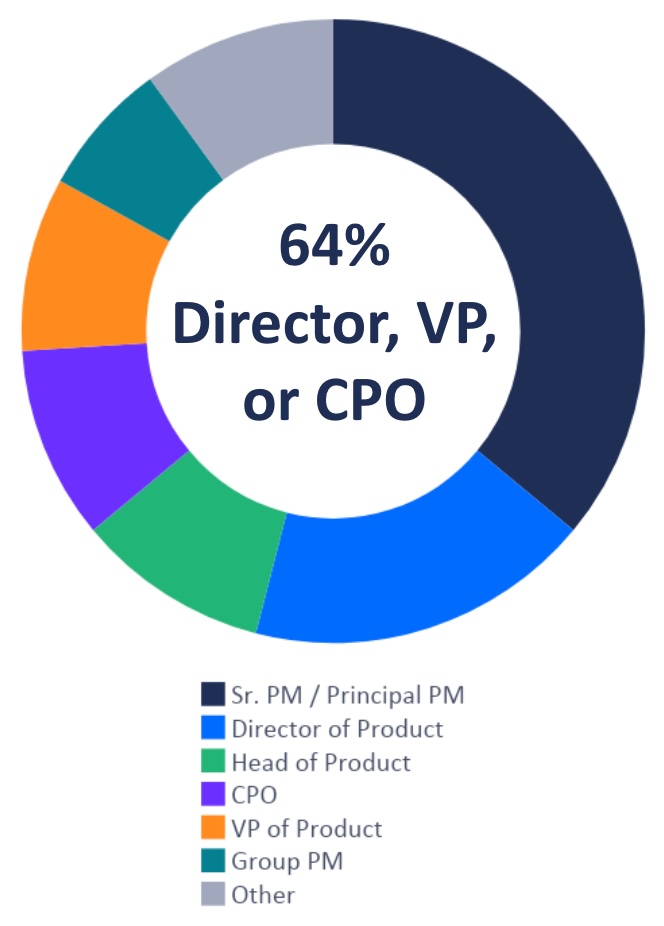
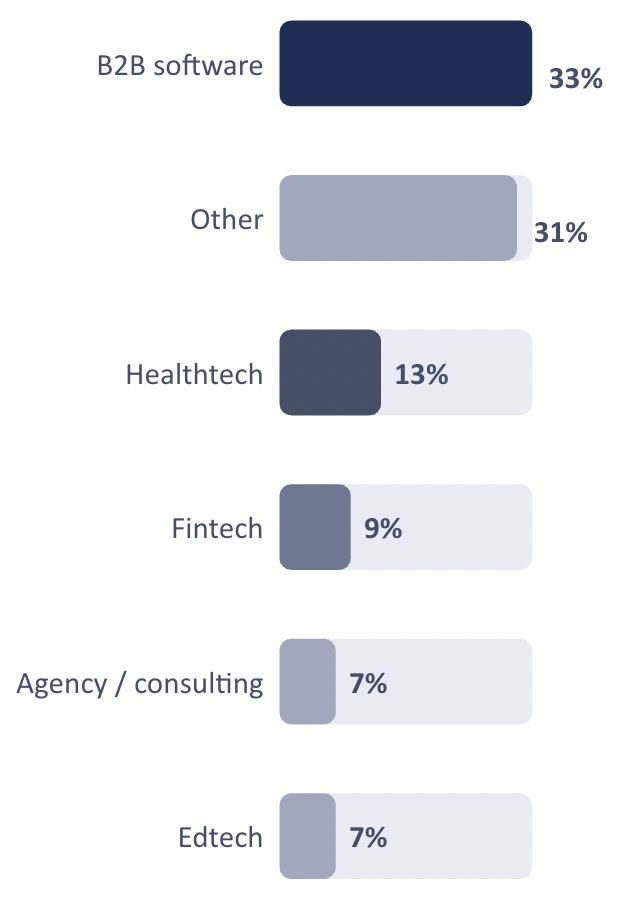
We surveyed 107 product leaders in Q2 2026 about how AI is reshaping their role and company. Respondents span North America (50%), Europe (24%), Asia-Pacific (13%), and other regions (13%). Here's more information about who responded:
Job seniority
Company size

Industry
PREVIEW OF SECTION 1
The AI pressure
When we asked how much pressure product leaders are getting from their C-suite to move faster on AI, here's how they responded:

That up and 77% of product leaders are under moderate, significant, or extreme pressure from their C-suite to move faster on AI. Only 5% say there's no pressure at all. That's not a trend. That's a mandate.
77%
of product leaders are under moderate, significant, or extreme pressure from their C-suite to move faster with AI
But here's the harder truth. The pressure is real and the urgency is real, but the clarity often isn't. Only 10% of product leaders say their C-suite is strongly aligned on what AI should actually do for their product. 28% are misaligned or not aligned at all. Most sit somewhere in the middle: told to move fast, without a shared definition of where they're going.

Pressure without alignment doesn't produce speed. It produces scramble.


Product teams are being asked to move faster with discovery and UX research, so engineers can get to coding faster.
PREVIEW OF SECTION 2
The agentic shift
The agentic shift isn't a future-state conversation anymore. For most product teams, it's already underway. 44% of product leaders are actively building AI agents into their product, either in progress or already in production. Another 39% are exploring. Only 15% aren't building at all.
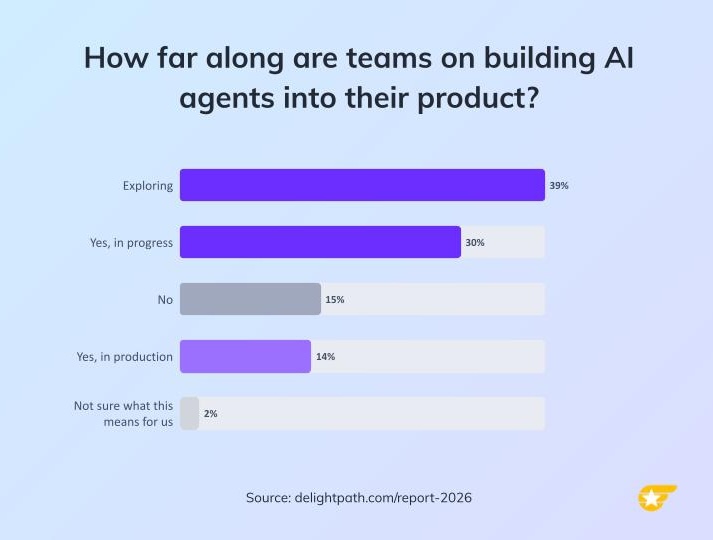
The teams moving fastest share something in common. They're not treating agents more as a mindset than a feature.


For us, agentic isn't a roadmap item, it's how we think. Every feature now starts AI-first, and that mindset is what moved us from exploring to production.
But not every team has that clarity. But not every team has that clarity. When we asked who owns the AI and agent strategy at their company, the answers were revealing.
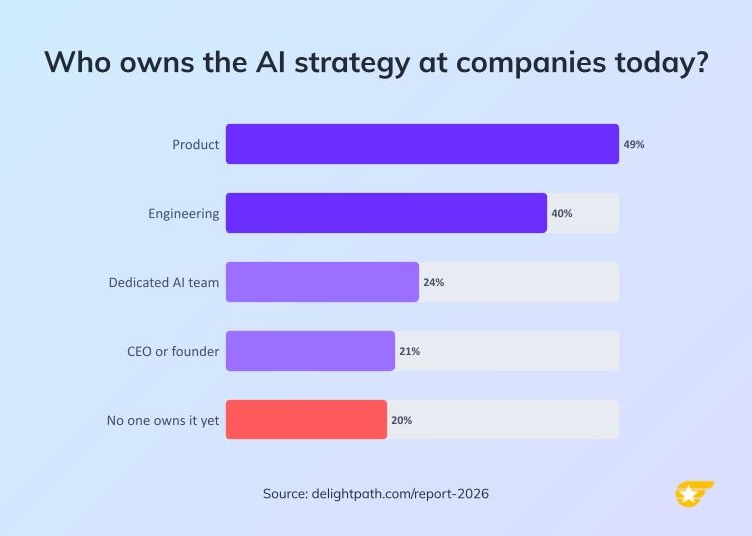
1 in 5 product leaders say nobody owns the AI strategy at their company yet. Contrast that with the 77% under moderate to extreme C-suite pressure to move faster on AI. Teams are being pushed to move fast on something nobody is formally accountable for.
1 in 5
of product leaders say nobody owns the AI strategy in their company.
In a space moving this fast, that's not a big problem. What starts as unclear accountability becomes misaligned priorities, duplicated effort, and missed windows. The teams that are winning on agents didn't just start building earlier. They decided earlier who was in charge.
And when they do get it right, the compounding works in their favor too.

In AI-Native software, the winning products get smarter every time a user shows up. The agentic interface captures user intent and turns it into the product's next improvement.
PREVIEW OF SECTION 3
User research in the AI era
At a moment when teams can ship faster than ever, you'd think research would be the first thing to go. The data says otherwise. 35% say AI has led their teams to do more research overall.
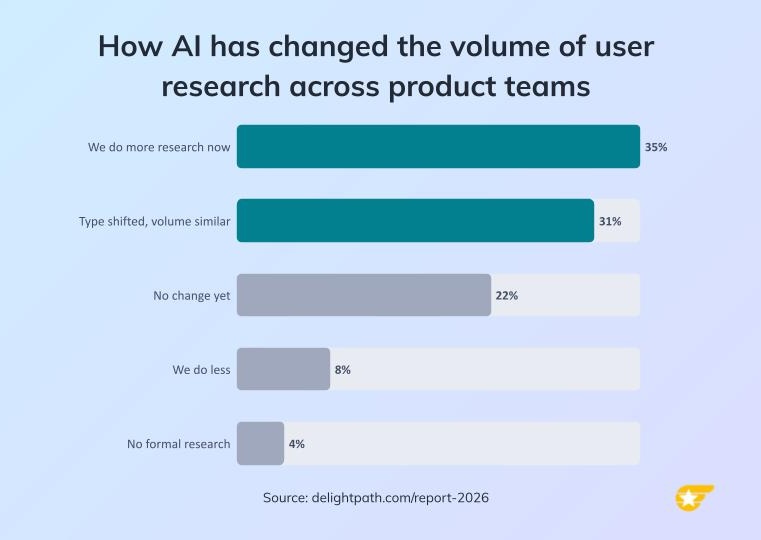
35% product teams are doing more user research than before. Almost none are doing less. Because AI accelerates execution. But execution without direction just means moving faster in the wrong direction. The cost of a wrong bet has never been higher.
35%
of product leaders say they're doing more user research than before.
AI tools are making it easier to stay close to users. 80% of product leaders are already using AI to conduct or synthesize user research. 34% are using them heavily.

But adoption doesn't automatically mean confidence. The speed at which teams are using AI for research is creating a new challenge: knowing when to trust what comes back.


When AI tools do the synthesis of user research, the hard work shifts to interrogating the output, which takes real care when everything AI produces looks plausible.
PREVIEW OF SECTION 4
AI feature adoption
Building AI features is one thing. Getting users to actually use them is another. When we asked product leaders what the top barriers to users adopting AI features, here's the result:

44% of product leaders say trust in the output is the #1 barrier to AI feature adoption. Not discoverability. Not onboarding. Trust. Users are skeptical of what AI produces, and that skepticism is killing adoption before it even starts.
44%
of product leaders say that user trust is the biggest barrier to AI feature adoption.
Unfortunately, most product teams find this out too late because it takes them too long to identify and act on adoption issues.
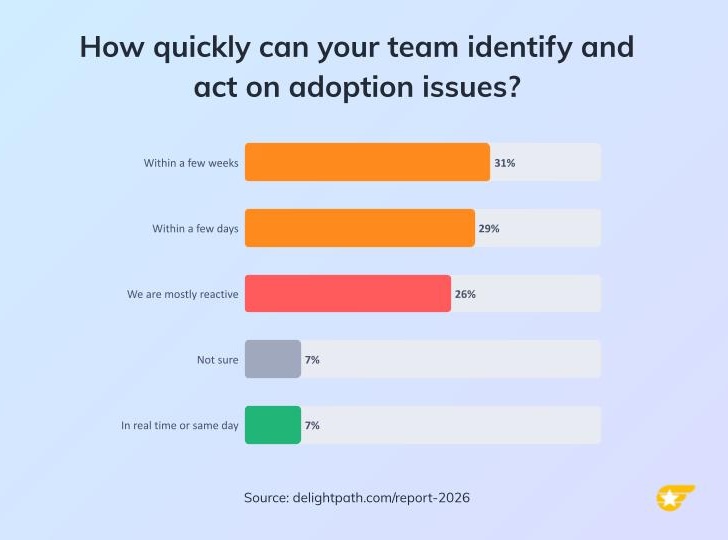
Only 7% can identify and act on adoption issues in real time. 26% describe themselves as mostly reactive. By the time they know a user hit a wall, that user has already formed a workaround or moved on.
This isn't a data problem. Most teams have analytics. It's a prioritization problem. Adoption issues compete with everything else on the roadmap and quietly fall to the bottom.


That's the real reason adoption stalls—not bad products, just feedback loops that are too slow. We have to help the moment a user is stuck, not after next month’s funnel review.
PREVIEW OF SECTION 5
The road ahead
The data in this report covers strategy, technology, and organizational structure. But we also asked product leaders something more direct: how are you actually doing?
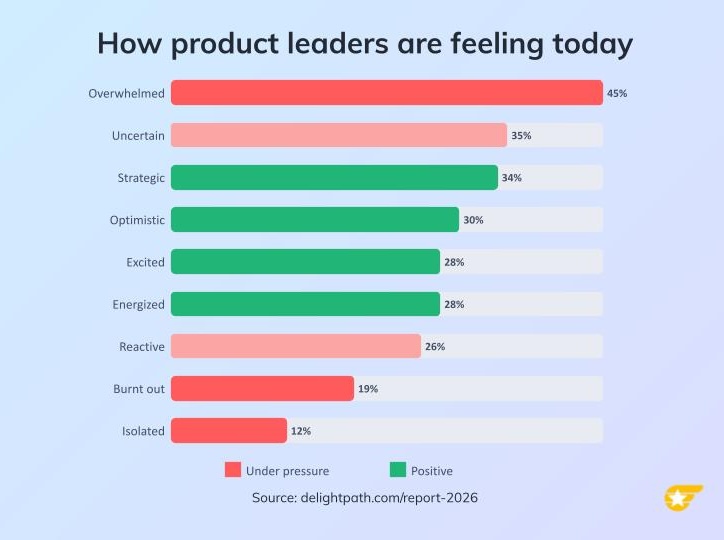
45% feel overwhelmed. 35% feel uncertain. But in the same question, 34% chose strategic, 30% chose optimistic, and 28% chose energized. Both things are true at the same time. This isn't a profession in crisis. It's a profession under pressure that hasn't given up.


The pressure to move faster on AI doesn't surprise me at all. The market is making big promises about AI, but turning those promises into measurable results is a lot harder than just adopting the technology.
And despite everything, most product leaders feel better about their role than they did a year ago. 51% say their experience has improved over the past 12 months. The job got harder. Most leaders got better at doing it.
85%
of product leaders feel optimistic about the future of product leadership.
But optimism doesn't mean they feel equipped. When we asked what would most help them navigate the next 12 months, the answer wasn't a course or a framework.
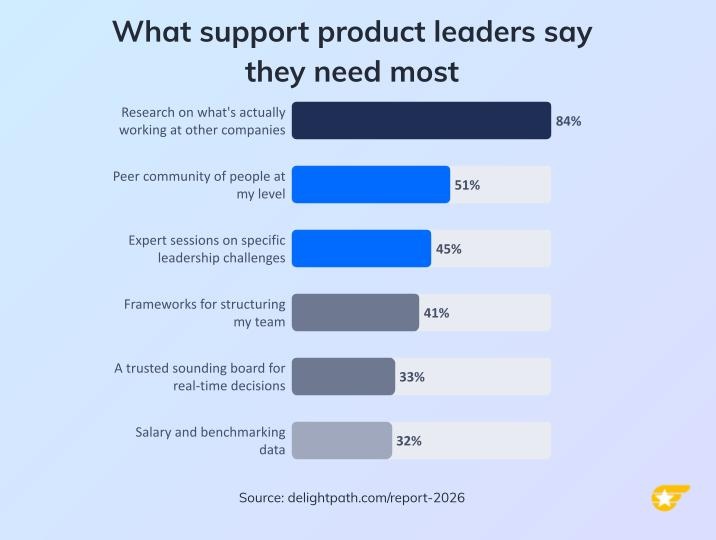
84% want research on what's actually working at other companies. 51% want a peer community at their level. This isn't a request for more content. It's a request for more connection.
Get the full State of Product Leadership Report 2026
107 senior product leaders share their thoughts on AI pressure, agentic shifts, research, adoption, and where the product leader's role is headed.