The evolution from Product-Led Growth to Agent-Led Growth
Most B2B SaaS products give users access but not outcomes. Mickey Alon, CEO of Foldspace AI, shares the five principles of Agent-Led Growth: the evolution of PLG that ties user intent directly to results.
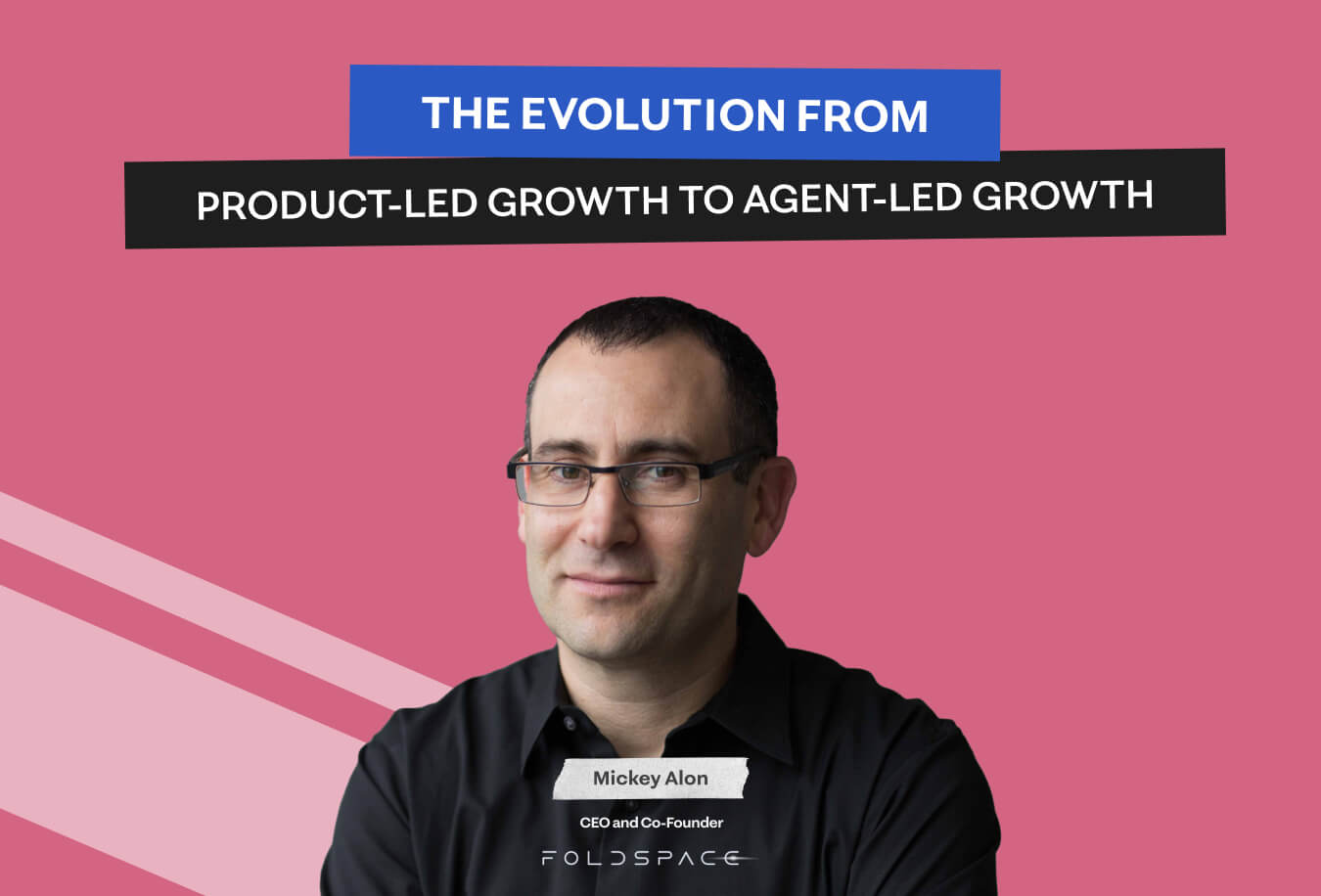
Table of contents
For a decade, Product-Led Growth was the answer to B2B SaaS's biggest question: how do you get users to value faster without armies of sales reps and onboarding specialists?
It worked. Until it didn't.
Mickey Alon, Co-Founder and CEO of Foldspace AI and author of one of the original PLG playbooks, put it plainly at the AI Product Leaders Summit in March 2026:
"PLG kind of hit a wall for SaaS B2B. We solved the access problem. We streamlined the sign-up for everyone. But we completely failed on the outcome problem."
The result? A generation of B2B products that are technically self-serve but practically overwhelming. Users log in, hit a wall of complexity, and silently churn. Mickey calls it the click tax: all the clicking, learning, and configuring we asked users to do in the name of "self-service," which was really just dumping product complexity onto them.
Agent-Led Growth (ALG) is his answer. It's not a rebrand of PLG. It's the evolution. And the shift has concrete implications for how product teams design onboarding, measure activation, and build roadmaps.
The problem nobody talks about: we confused access with outcomes
PLG solved access. It made sign-up frictionless. It gave users the keys and pointed them at the product.
What it didn't solve was outcomes. Users could access everything and accomplish nothing.
"Before AI, they'd see initial value," Mickey said. "But today, if you look at AI-first companies, it's not about first value. They start delivering outcomes in the first sixty seconds."
That's the bar users now walk in with. And most B2B SaaS products aren't built to meet it.
The deeper problem is that when the PLG movement stopped handholding users through complex B2B software, it didn't remove the complexity. It just handed it to users. Tooltips, checklists, and guided tours are all ways of saying "figure it out yourself, but with hints." They're not the same as delivering an outcome.
Agent-led growth: five principles for your roadmap
ALG flips the relationship between the product and the user. Instead of the user learning the product, the product learns the user. The agent handles the "how" so the user can focus entirely on the "what."
Here's how Mickey breaks that down into five actionable principles.
1. Capture intent, automate execution
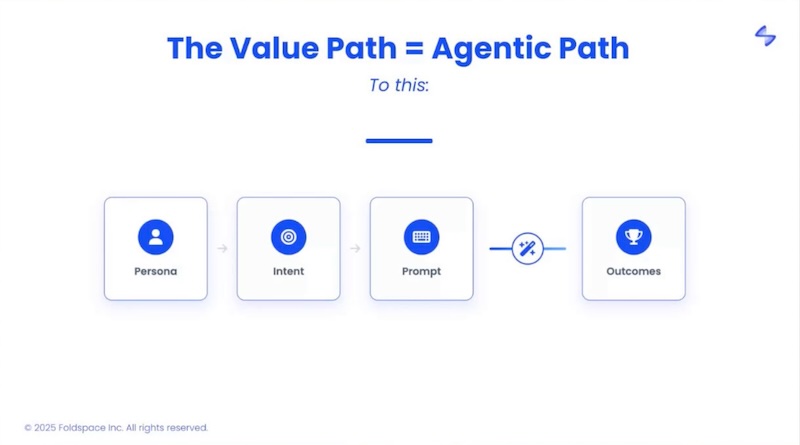
This is the foundational shift. The user owns the goal. The product owns the execution.
In traditional SaaS, if you want to run a report on Q3 revenue, you navigate to the reports module, apply three filters, select the right report type, and configure the output. Every step is a click tax.
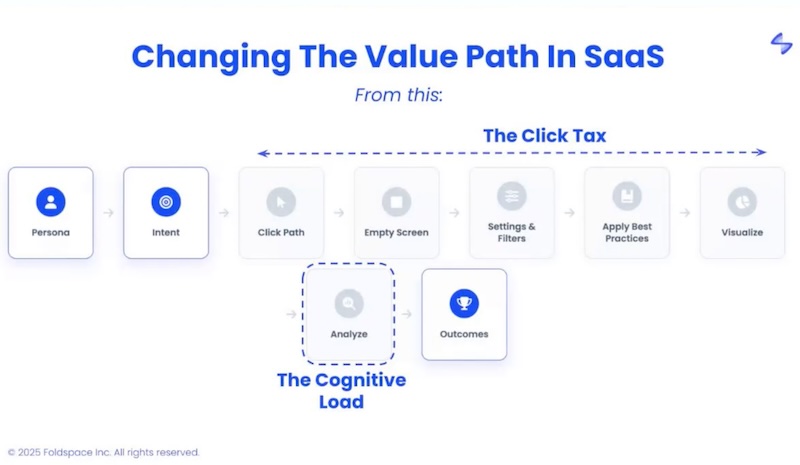
In an ALG-designed product, you express the intent ("show me why Q3 revenue dipped") and the agent runs the report. You never touch the navigation.
"If users need to memorize your UI, you're going to be disrupted by more AI-first experiences." — Mickey Alon
CRMs are a good illustration of where this matters most. They hold enormous value, but the data is notoriously difficult to access and use. An agent layer that understands intent doesn't just make CRMs easier: it makes them actually useful for the people who need them.
2. Build generative experiences
The blank canvas problem has plagued PLG from the beginning. Templates helped, but they introduced their own friction: now the user has to pick the right template, which requires understanding the product well enough to know which template fits. Most don't.
ALG replaces the blank canvas with a generative first experience. The goal isn't 100% completion. It's 80%.
"If you try to go all the way to 100%, you might misunderstand user intent. Deliver the 80% they need and let them refine it." — Mickey Alon
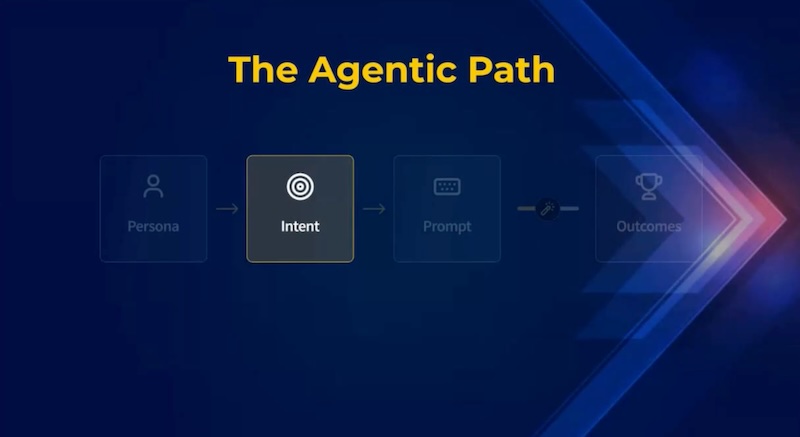
Gamma is a good model here. When a user wants to build a presentation, Gamma collects context (persona, goals, intent), generates an 80% draft, and hands it back for fine-tuning. The user never faces a blank slide. They start with something they can react to, which is cognitively much lighter than starting from nothing.
The key design decision is resisting the urge to ship a single "generate" button with no feedback loop. Generative experiences work best when they're conversational: collect context, generate a draft, let the user refine. That loop is what builds trust.
3. Embed knowledge, engineer champions
Even users who successfully onboard often plateau. They see initial value but never become power users or internal champions. That gap between initial value and expert-level usage is where churn happens, and where customer success teams spend most of their time.
The agent solves this by embedding best practices into the generation process itself.
"If the agent generates, it's actually the best person to generate the first element, because it's going to ingrain best practices straight into your feature. You don't need to educate anyone." — Mickey Alon
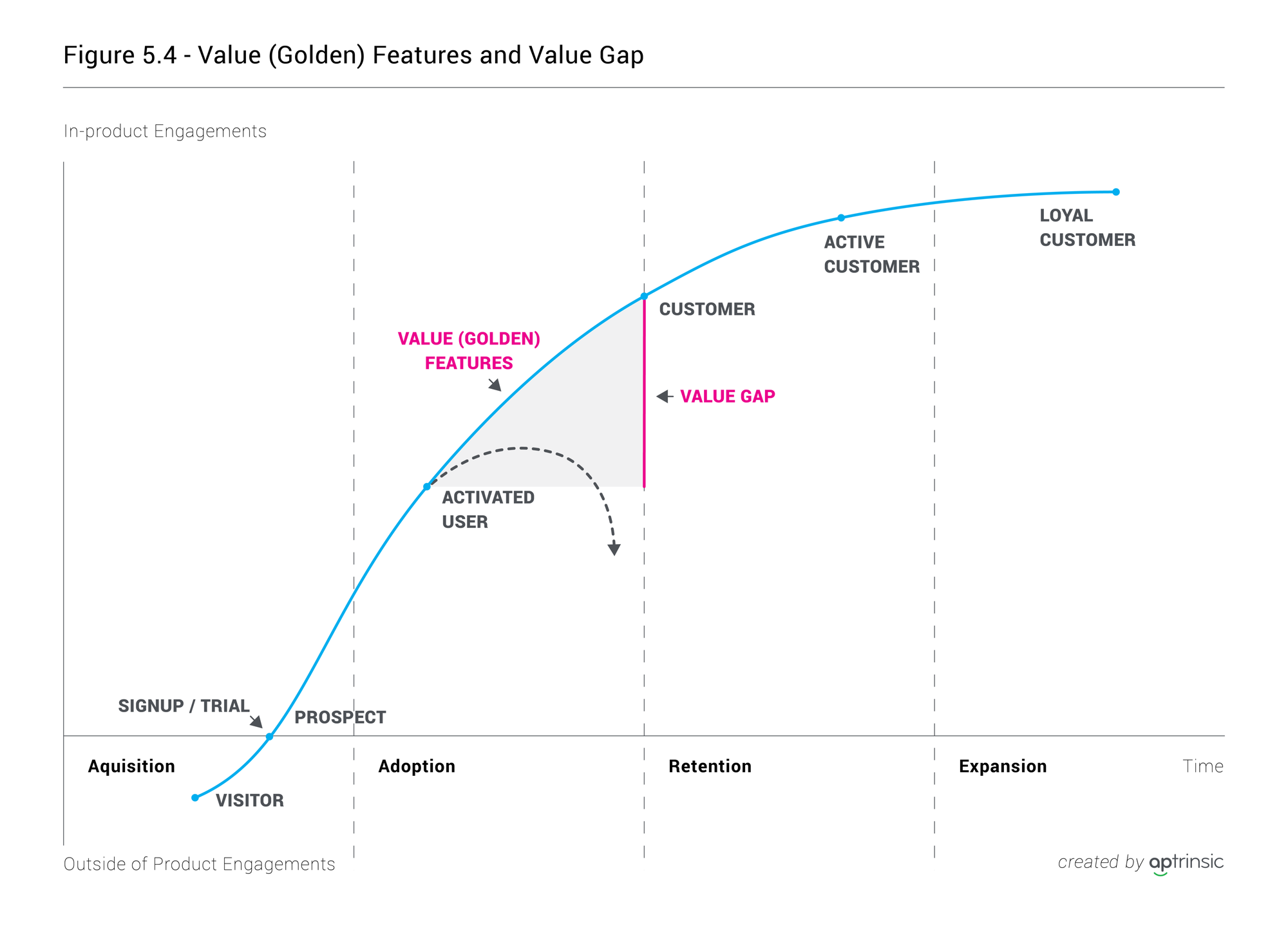
This is a meaningful shift. Feature discoverability, which has always been a product challenge, becomes less of a problem when the agent uses advanced features automatically on the user's behalf. Users see outcomes powered by features they didn't know existed. The knowledge gap closes without a training program.
4. Mine conversational insights
Product teams have spent years analyzing clicks, heatmaps, and page views to figure out where users are struggling. It's slow and often inconclusive.
Conversational interfaces change the data entirely.
"In the conversational UI, the guesswork can disappear, because users are literally typing exactly what they want. Every single interaction becomes the ultimate demand signal." — Mickey Alon
When a user asks the agent to do something the product can't do yet, that's a direct signal for your roadmap. When interactions end in frustration rather than resolution, that's measurable. In the PLG era, frustrated users churned in silence. In ALG, the agent logs unresolved outcomes and sentiment, making product decisions much easier to prioritize.
5. Design agentic UX
The biggest mistake Mickey sees in products right now: bolting a chat box onto a legacy interface and calling it AI.
"Text is not just one modality. True ALG requires dynamic experiences that actually adapt to the user workflow." — Mickey Alon
Sometimes voice is the right interface. Sometimes an in-chat UI is right. Sometimes the right move is summoning a feature directly into the conversation to skip navigation entirely. Sometimes the user just needs to click, and click wins.
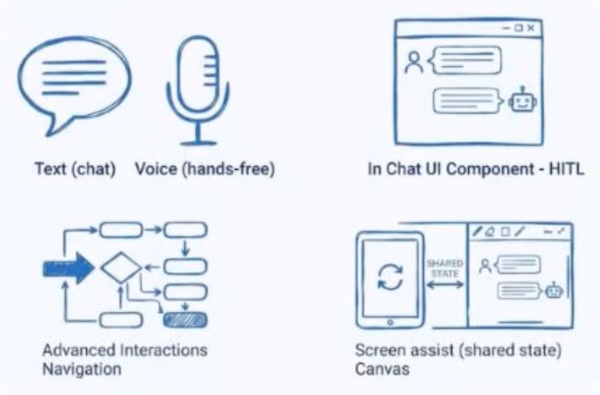
The point isn't to make everything conversational. It's to design each moment in the product around the interaction type that reduces cognitive load most effectively. And critically: to maintain context as users move through different screens. The agent should know where the user has been, what they've tried, and what they're trying to accomplish. Not reset with every new screen.
Why it works: the psychology of cognitive load
Underlying all five principles is a single idea: cognitive load is the enemy of activation.
When users have to hold too much in working memory (navigation structure, feature names, configuration steps, best practices) they make mistakes, get frustrated, and leave. Agents absorb that cognitive burden. They handle the complexity so users can focus on the decision, not the process.
Mickey's framing on activation is worth taking seriously: "Activation is not a checklist. I would stop celebrating when a user clicks through 10 steps because they didn't really see outcomes."
True activation, in ALG terms, is when the agent bridges the value gap and delivers a real result in the first session. That's a higher bar than most products are built to hit, but it's the bar users now expect.
The discipline problem: when to let the human take over
One of the trickier design questions in ALG is knowing when not to use the agent.
Mickey is direct about this: sometimes the click is more effective than the prompt. If an agent has built the dashboard you wanted, changing the date range with two clicks is faster than prompting it to change. The last 20% of fine-tuning is often easier through direct interaction than through conversation.
The goal isn't to make everything agentic. It's to use agents where they eliminate genuine friction (particularly at the moments where users would otherwise face a blank canvas, complex navigation, or a steep learning curve) and to hand back control when direct interaction is more efficient.
Human-in-the-loop isn't a fallback. It's part of the design. It also builds trust: users who can see what the agent is doing, verify it, and adjust it are more likely to develop confidence in it over time.
Key takeaways
- PLG solved access, not outcomes. Self-serve sign-up is table stakes. The new bar is delivering a meaningful outcome in the first session.
- The click tax is real and measurable. Every step you ask users to navigate before they reach value is a potential drop-off point. ALG reduces the path from intent to outcome to as few steps as possible.
- 80% is the right target for generative experiences. Aiming for 100% completion risks missing intent. An 80% draft the user can refine builds more trust than a finished output they need to undo.
- Conversational signals are a product roadmap. What users ask the agent to do (including things the product can't do yet) is more direct demand signal than any heatmap.
- Activation is an outcome, not a checklist. Stop measuring activation by steps completed. Measure it by value delivered in the first session.
The bigger picture
The shift from PLG to ALG isn't just a product design change. It's a philosophical one.
PLG said: make it easy enough for users to figure it out themselves. ALG says: don't make them figure it out at all.
That's a harder product to build. It requires investment in inference data, user context, and agentic UX design, none of which come from bolting a chat window onto your existing product. But the payoff is significant: users who reach value faster, churn less, and become the internal champions that drive expansion.
"With good inference data and user context, you can turn your users into champions instantly, without them even knowing they're going to see a great outcome."
This article is based on insights from Mickey Alon's presentation at the AI Product Leaders Summit, March 2026. Mickey is Co-Founder and CEO of Foldspace AI and author of Mastering Product Experience in SaaS.



Related Posts